
Use two views for each candidate
A square field in plan view does not tell a buyer whether its individual features are cones or pyramids. Ask for a view of the feature base and one side profile. A conical form has a circular base, while a pyramidal form presents distinct faces and a polygonal base.
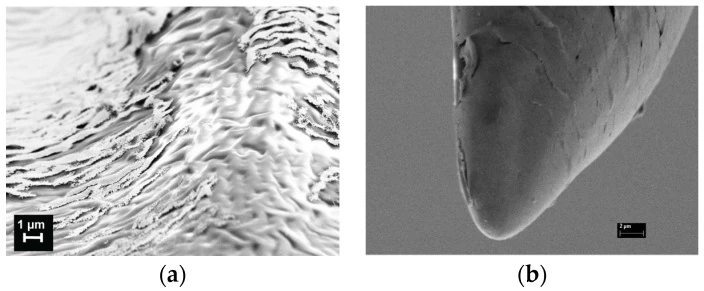
Image credits
Principia Dardano, Alessandro Caliò, Vincenza Di Palma, Maria Fortuna Bevilacqua, Andrea Di Matteo and Luca De Stefano · Image source · CC BY 4.0 · Original figure proportions and markings retained; converted to WebP.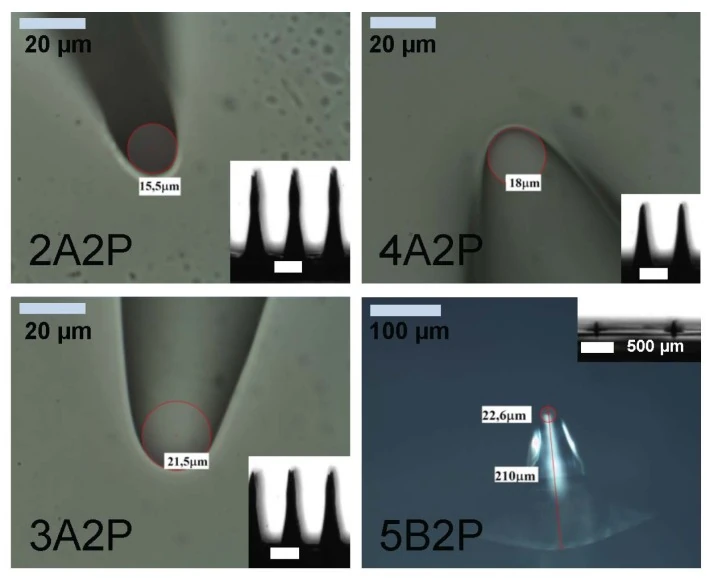
Image credits
Principia Dardano, Alessandro Caliò, Vincenza Di Palma, Maria Fortuna Bevilacqua, Andrea Di Matteo and Luca De Stefano · Image source · CC BY 4.0 · Original figure proportions and markings retained; converted to WebP.Compare like with like
An obelisk-style design can combine a shaft with a distinct taper at the end. Ask the designer to mark where the shaft ends and the tip begins. Place candidate views at a common scale and use the same units before comparing their appearance.
Turn terminology into an approval record
Link the chosen geometry to a drawing revision or sample identifier. If a brand has requirements concerning handling, appearance or compatibility, record those questions for the finished patch review. A needle profile by itself does not establish finished-product performance.
Does the drawing describe the apex or the entire feature?
Tamez-Tamez and colleagues reported height, base length, tip radius and angle separately for square pyramidal steel features. A catalogue description such as “pyramidal” leaves several of those quantities open. For a shape comparison, attach the view that defines the footprint and a profile that identifies the apex. Where a radius is quoted, ask which location and method support the value. Record any unresolved detail so a visual match does not become an unintended contractual dimension.
Tamez-Tamez et al. (2023) · Dimensional and surface metrology of square pyramidal features
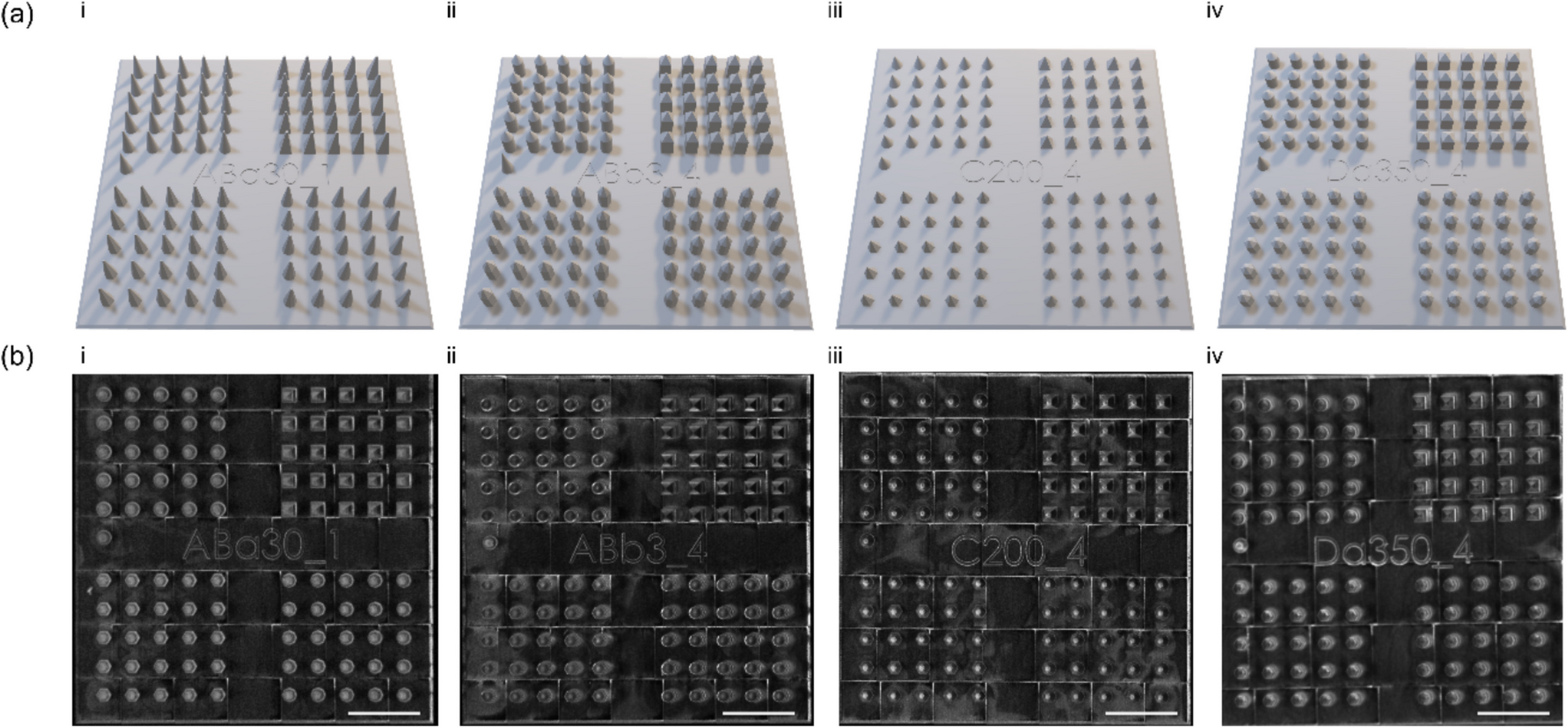
Prepare your inquiry
Ask for a base view and a profile before naming the shape.