
Start with the part the buyer needs
A brand developing a crescent eye patch can keep its existing outer shape while changing the area that carries microstructures. A distributor comparing off-the-shelf samples may need the reverse: the same field in several carrier shapes. Attach the existing sample code and identify which part of the design is open for change.
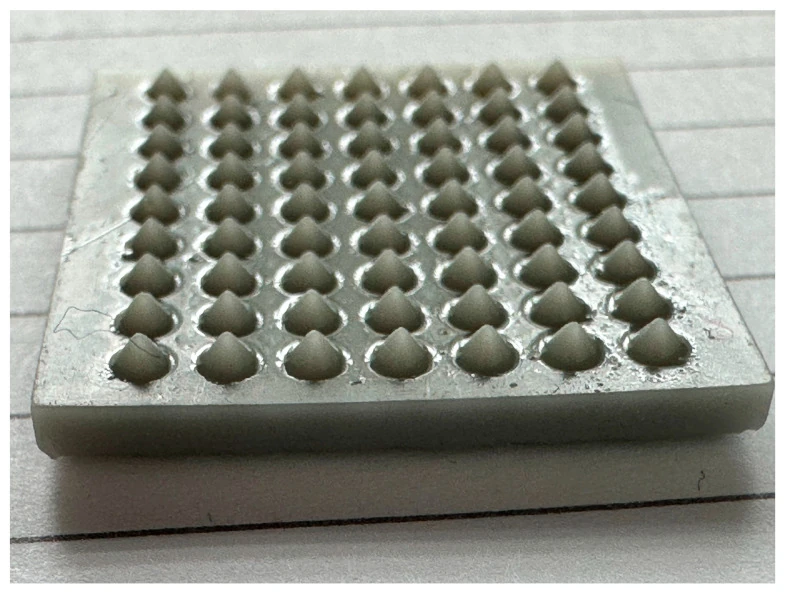
Image credits
Faisal Khaled Aldawood, Abhay Andar and Salil Desai · Image source · CC BY 4.0 · Original figure proportions and markings retained; converted to WebP.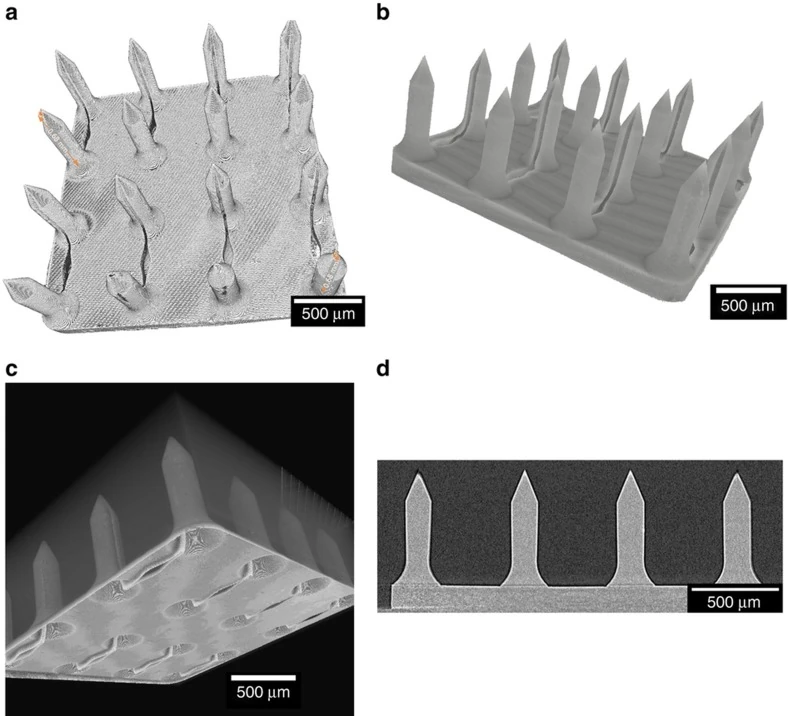
Image credits
Zahra Faraji Rad, Robert E Nordon, Carl J Anthony, Lynne Bilston, Philip D Prewett, Ji-Youn Arns, Christoph H Arns, Liangchi Zhang and Graham J Davies · Image source · CC BY 4.0 · Original figure proportions and markings retained; converted to WebP.Describe the field separately
Mark the usable area of the patch, the proposed pattern boundary and the clear margin between them. Include the intended viewing side. Show the left and right versions on the same drawing if the product comes as a pair. A photograph plus a dimensioned outline is a useful start.
Decide what would answer the first question
A layout drawing can settle field placement. A tool sample can show surface detail. A finished cosmetic patch is needed to review how the field sits in the assembled article. State which output your team wants to examine and who will sign it off.
How will reviewers identify the same field in every image?
La Malfa and colleagues included a reference feature and a code on their research arrays. That detail helps answer a familiar design-review question. If two fields look similar, how will the reviewer tell which one appears in a cropped image? In the brief, name a visible corner or other orientation mark and label each field on an overview. Ask the supplier to use those same labels when presenting the sample, even if the commercial patch outline changes.
La Malfa et al. (2025) · Reference features and coded arrays in mold replication
Prepare your inquiry
Mark the array field before commissioning tooling.