
Recognize the raised working face
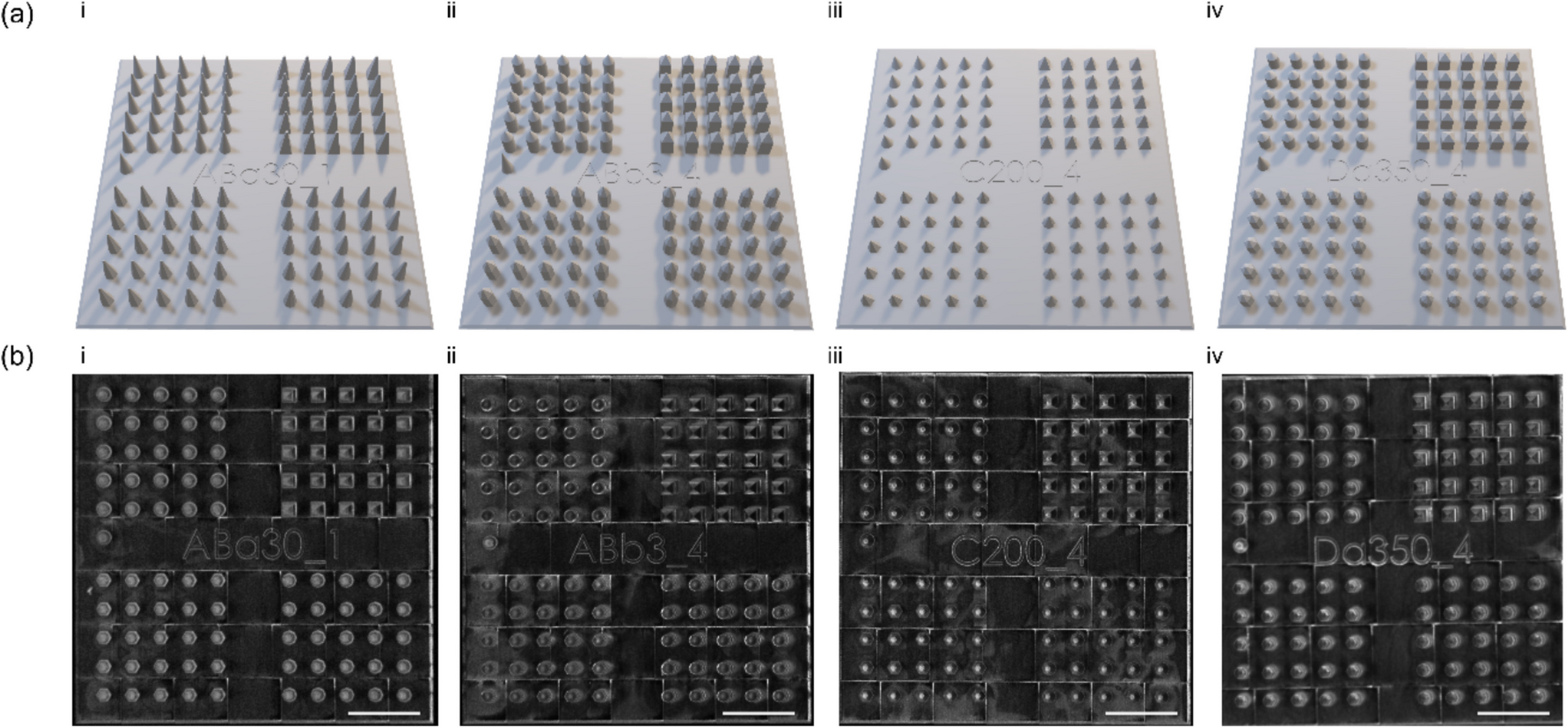
A positive master has outward-projecting features. In a straight overhead photograph an array of tips can look remarkably similar to a field of recesses. Request an oblique view or a section drawing with the raised side marked, alongside a picture of the whole insert.
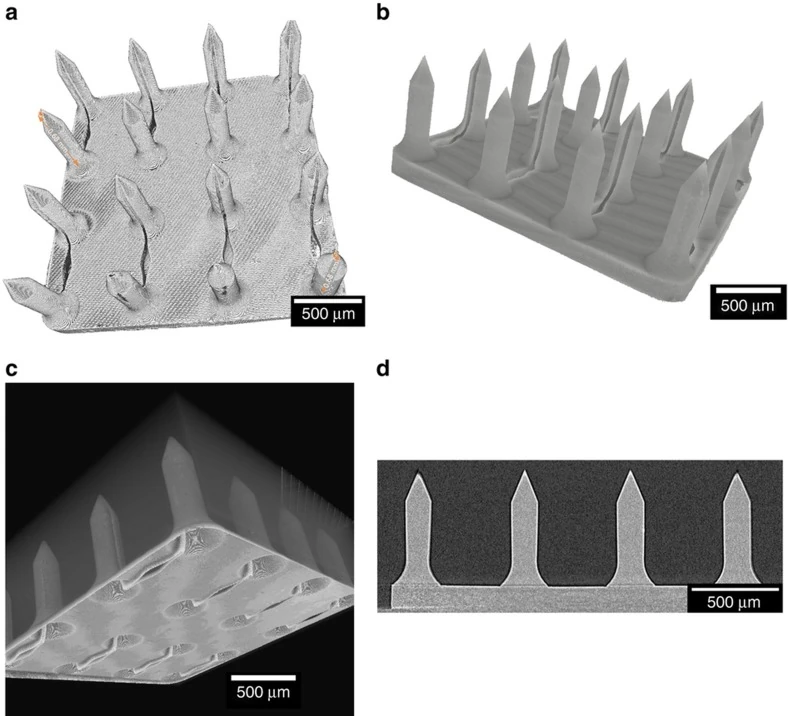
Image credits
Zahra Faraji Rad, Robert E Nordon, Carl J Anthony, Lynne Bilston, Philip D Prewett, Ji-Youn Arns, Christoph H Arns, Liangchi Zhang and Graham J Davies · Image source · CC BY 4.0 · Original figure proportions and markings retained; converted to WebP.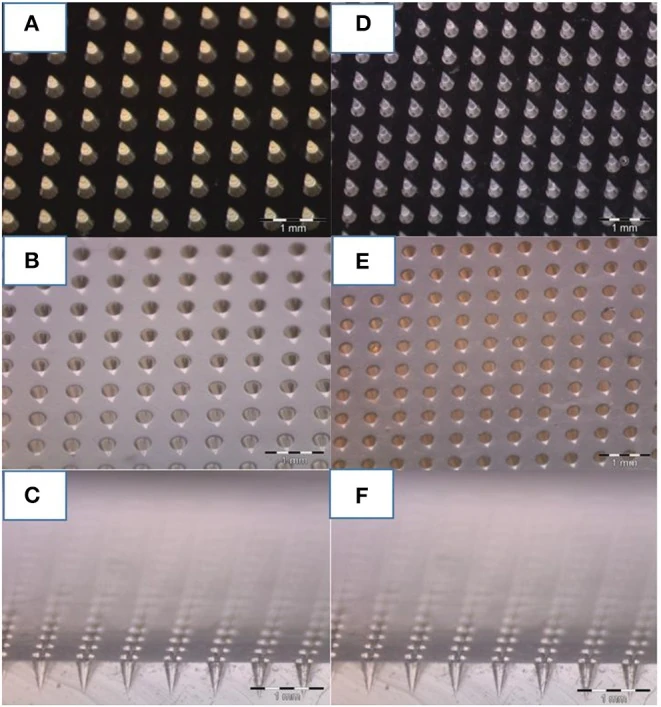
Image credits
Mario Battisti, Raffaele Vecchione, Costantino Casale, Fabrizio A Pennacchio, Vincenzo Lettera, Rezvan Jamaledin, Martina Profeta, Concetta Di Natale, Giorgia Imparato, Francesco Urciuolo and Paolo Antonio Netti · Image source · CC BY 4.0 · Original figure proportions and markings retained; converted to WebP.Specify what travels with the master
Ask whether the quotation covers the patterned insert, a holder or carrier, and any corresponding reference image. Identify which face may be handled and whether the returned item belongs to the supplier or the customer. Ownership and custody affect access to repeat samples.
Keep one reference for approval
A buyer can approve an insert outline while still having questions about the feature field. Give the outline and field separate items on the review sheet. Keep the design revision and physical sample identifier together so a later replica can be traced to the intended master.
Which measurements belong to the physical master?
Faraji Rad and colleagues compared the physical master, its negative mold and a positive replica using micro-CT. For a master order, put the drawing value beside a column explicitly labelled “measured on master.” A reading taken from a sample made with the tool deserves its own column. If the quotation includes only the CAD file and a photograph, ask which master dimensions can be checked at handover and how the delivered tool will be identified.
Faraji Rad et al. (2017) · Three-dimensional comparison of master, mold and replica
Prepare your inquiry
Write “positive master with raised features” on the brief.