
Identify which component the material describes
“Silicone mold” usually describes a tool. It says little about the composition of a finished cosmetic patch. Make a short component list covering the master, the cavity template, any base or holder and the patch being evaluated. Give each item its own material field.
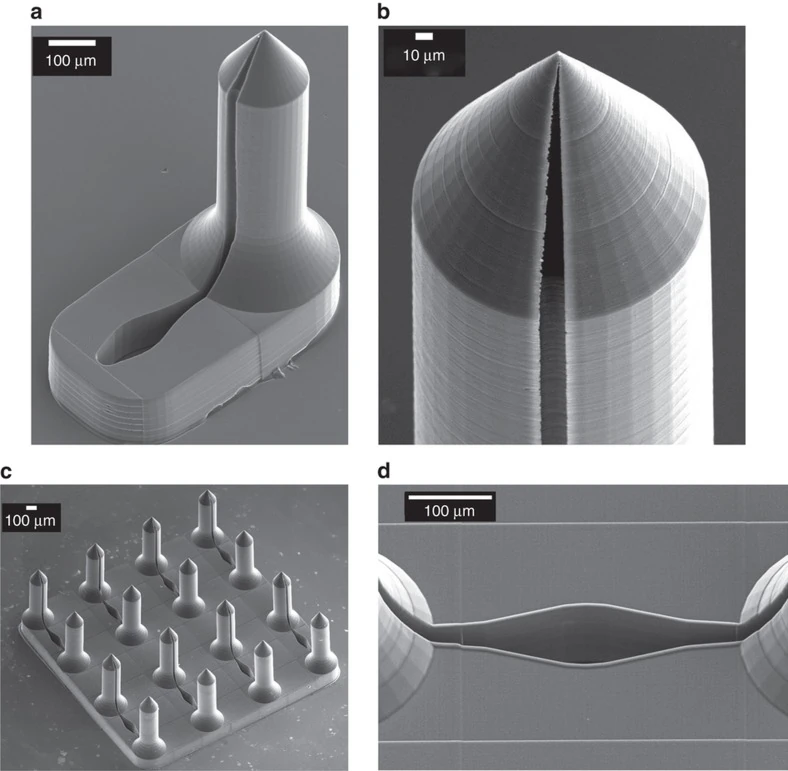
Image credits
Zahra Faraji Rad, Robert E Nordon, Carl J Anthony, Lynne Bilston, Philip D Prewett, Ji-Youn Arns, Christoph H Arns, Liangchi Zhang and Graham J Davies · Image source · CC BY 4.0 · Original figure proportions and markings retained; converted to WebP.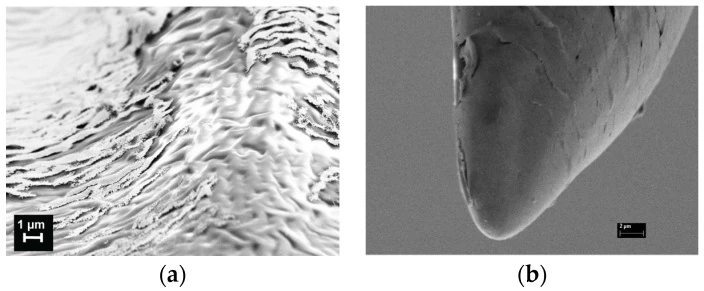
Image credits
Principia Dardano, Alessandro Caliò, Vincenza Di Palma, Maria Fortuna Bevilacqua, Andrea Di Matteo and Luca De Stefano · Image source · CC BY 4.0 · Original figure proportions and markings retained; converted to WebP.Ask for the relevant material reference
A designer quoting a rigid master and flexible replica should identify the material associated with each part and which details are provisional. If a specific grade matters to your team, record the grade or supplier reference and request the document that supports it.
Review substitutions as changes
Two visually similar templates can have different material declarations or mechanical handling characteristics. Agree how a proposed material change will be recorded and whether a replacement reference sample is necessary. Keep the prior revision available until the buyer reviews the change.
Which material belongs to the master, cavity and sample?
Faraji Rad and colleagues measured several objects in the same replication chain, including an elastomeric negative and a thermoplastic replica. A supplier could therefore answer “What is it made of?” correctly while describing a different object from the one the buyer means. Put the master, working mold and delivered sample on separate lines in a quotation. Against each, request its material designation and specify whether a replacement material would require you to review another sample.
Faraji Rad et al. (2017) · Three-dimensional comparison of master, mold and replica
Prepare your inquiry
Keep tooling materials and finished patch ingredients on separate records.