
Identify what comes off
A release liner covers adhesive during handling. The carrier or backing generally stays with the assembled patch. An engineering mold is a separate forming tool. For a buyer reviewing a photograph labelled simply “film,” a picture of the detached piece next to the assembled sample can resolve the ambiguity.
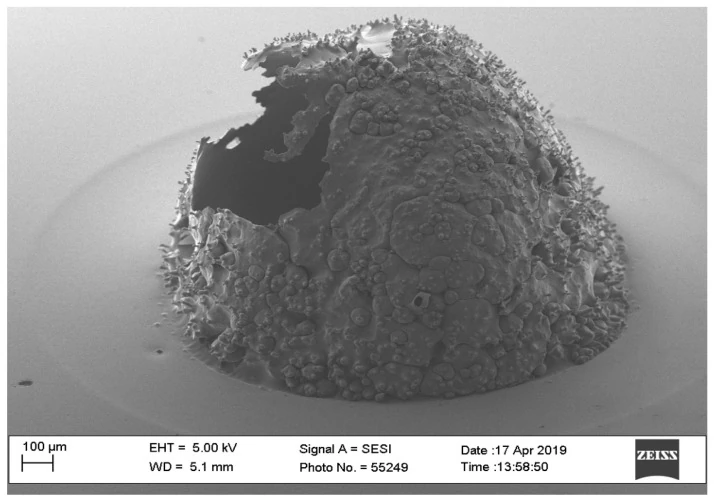
Image credits
Faisal Khaled Aldawood, Abhay Andar and Salil Desai · Image source · CC BY 4.0 · Original figure proportions and markings retained; converted to WebP.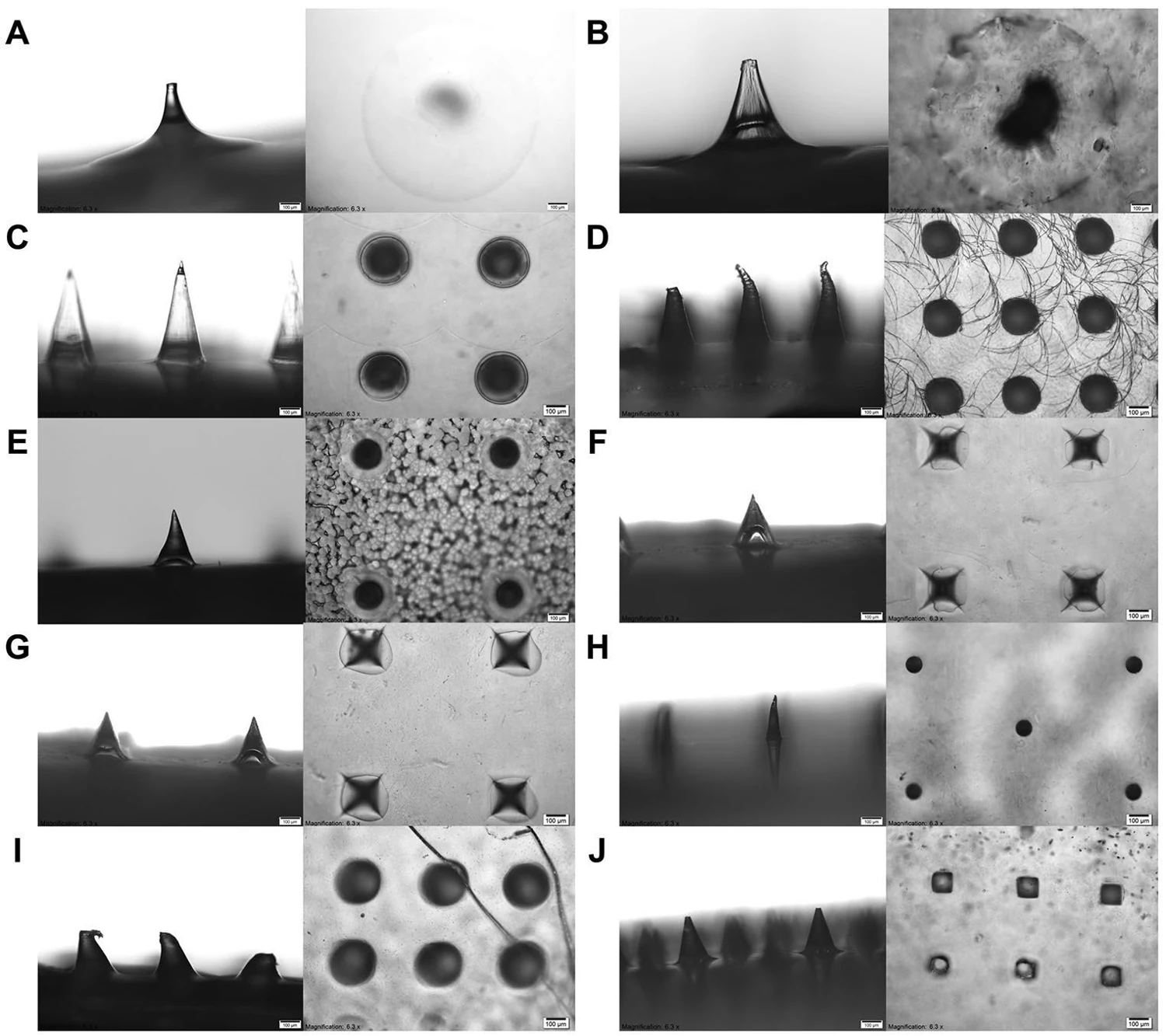
Image credits
Jing Yi Lee, Shi Hui Dong, Keng Wooi Ng and Choon Fu Goh · Image source · CC BY 4.0 · Original figure proportions and markings retained; converted to WebP.Locate the protective space
Where a tray is included, its recess can protect the patterned face from contact. It is easy to mistake an empty tray for a production mold. Ask whether the piece is packaging shipped to the end user or tooling retained by the supplier. Mark which surface faces the needle field.
Label the sample photographs
Ask for the assembled pack, the patch after its liner has been removed, and the empty carrier or tray. Label each image with the same sample code. That set allows a packaging buyer and tooling engineer to refer to the same parts even when their terminology differs.
How can a liner be identified independently of the tooling?
Avery Dennison’s MED 5597H data sheet identifies carrier, adhesive and release liner as separate layers and lists the construction of its particular product. In an inquiry, ask for the same distinction on your own assembly. A marked edge view can show the removable layer, the carrier that stays with the patch and the face presented to the tool. Tie each label to the proposed material reference so a photograph of a white liner does not settle a material substitution.
Avery Dennison Medical (2020) · MED 5597H construction and typical values
Prepare your inquiry
Identify the component by what it does and where it goes.