
Read pitch from centre to centre
Two dots can appear equally spaced in a photograph even when their base widths differ. Ask for centre-to-centre pitch and base width as separate dimensions. On a rectangular grid, check whether row and column pitch are identical and specify the viewing direction used.
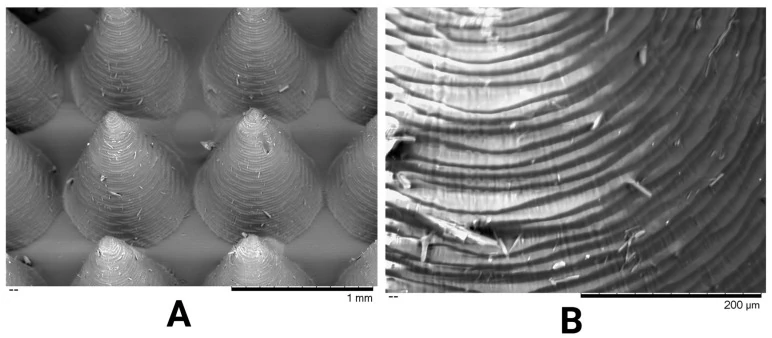
Image credits
Rutuja N. Meshram and Dimitrios A. Lamprou · Image source · CC BY 4.0 · Original figure proportions and markings retained; converted to WebP.
Image credits
Principia Dardano, Alessandro Caliò, Vincenza Di Palma, Maria Fortuna Bevilacqua, Andrea Di Matteo and Luca De Stefano · Image source · CC BY 4.0 · Original figure proportions and markings retained; converted to WebP.Count what fits inside the outline
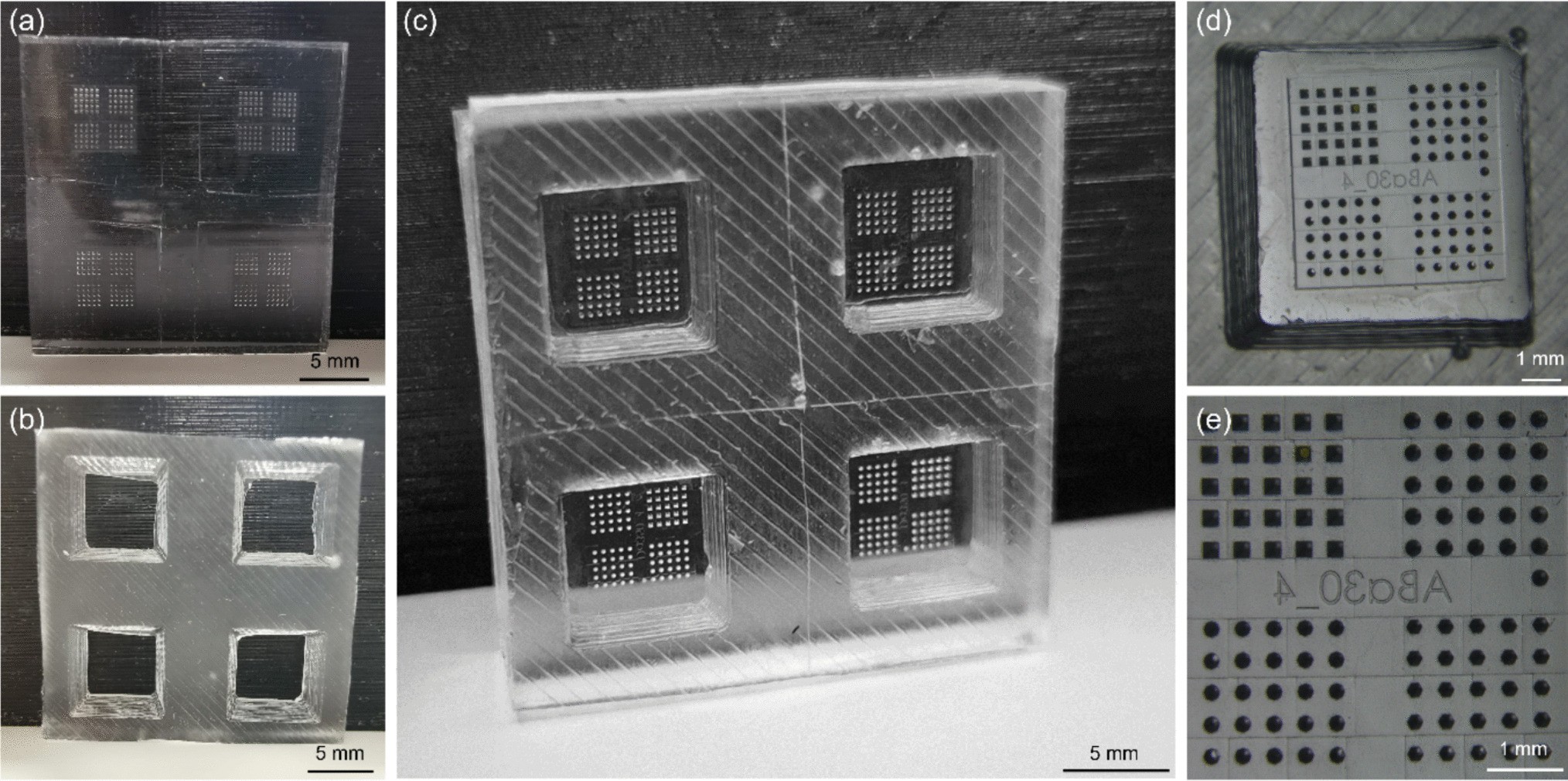
A curved boundary can cut short the outer rows. Two patches with the same nominal pitch and overall dimensions may therefore carry different feature counts. Request the count for the actual trimmed layout and ask how density is calculated if a supplier quotes it per unit area.
Keep units with the drawing
A patch outline is often drawn in millimetres and fine features in micrometres. Keep those units beside each dimension. For comparison, use the same definition of patterned footprint on both samples and distinguish the field boundary from any smooth perimeter.
Which area did the supplier use when stating array density?
La Malfa and colleagues used several distinct fields on a single research layout. That example makes the denominator in a density claim worth checking. State whether a quoted count covers one field or every field, then draw the boundary used for the area calculation. For a layout with an unpopulated margin, dividing by the full patch area gives a different result from dividing by the populated field. Keep the original count and area together so another reviewer can reproduce the figure.
La Malfa et al. (2025) · Reference features and coded arrays in mold replication
Prepare your inquiry
Compare pitch, field size and feature count together.