
Start with the decision the sample must support
A stock template can be a useful reference when the buyer needs to see a general needle shape or discuss sample handling. If the decision concerns fit in a particular tray or field position within a branded crescent, check whether the stock geometry matches that specific requirement.
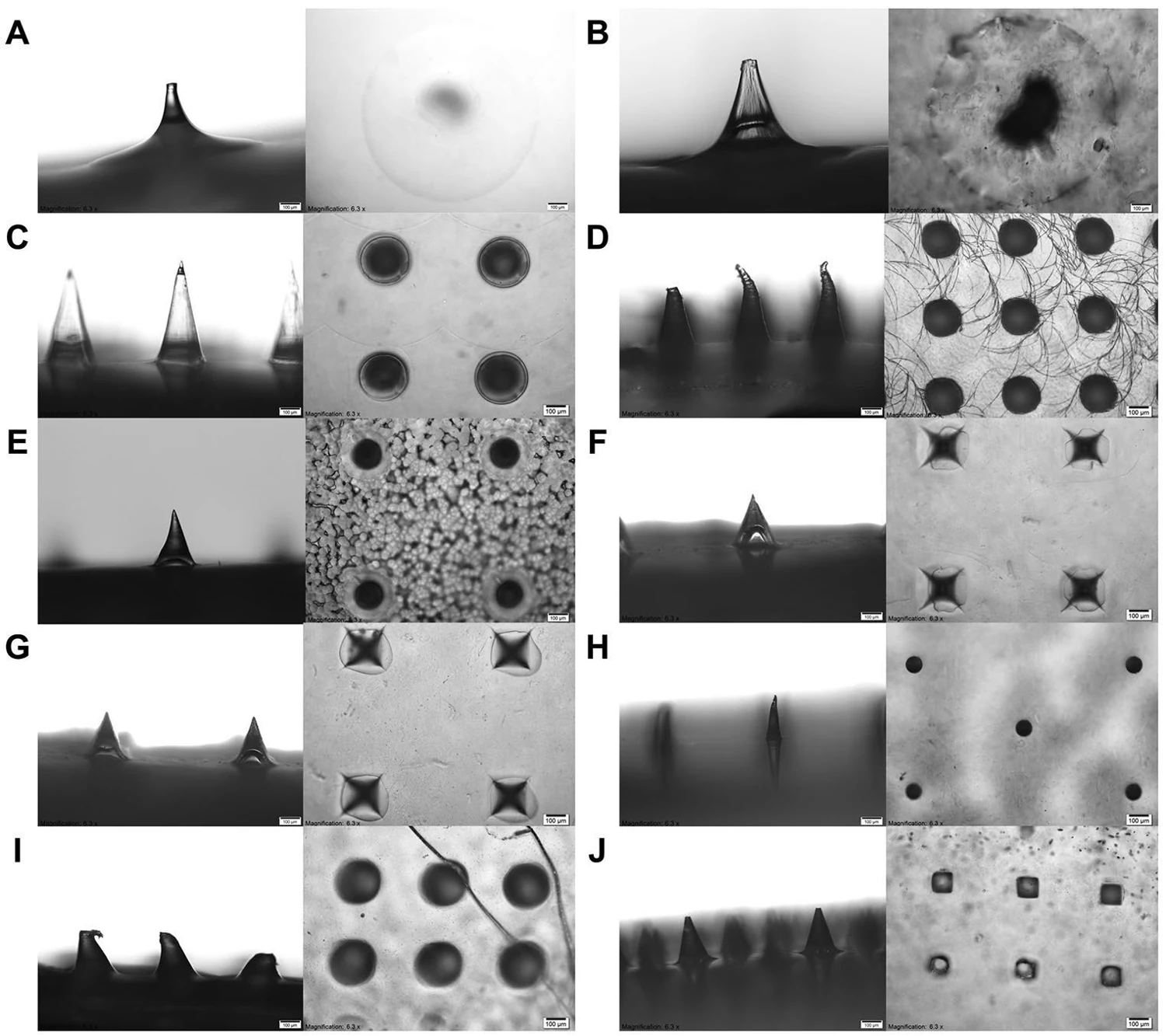
Image credits
Jing Yi Lee, Shi Hui Dong, Keng Wooi Ng and Choon Fu Goh · Image source · CC BY 4.0 · Original figure proportions and markings retained; converted to WebP.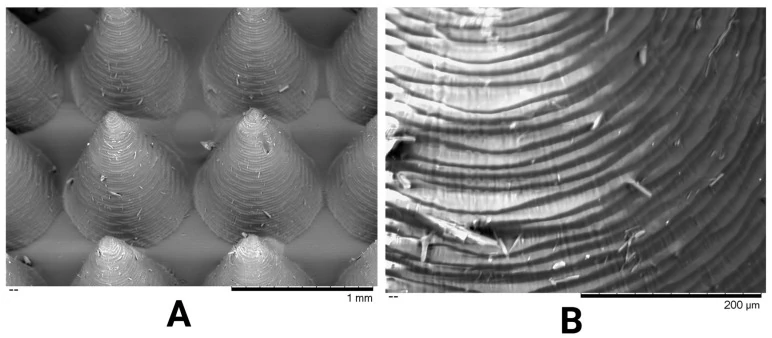
Image credits
Rutuja N. Meshram and Dimitrios A. Lamprou · Image source · CC BY 4.0 · Original figure proportions and markings retained; converted to WebP.Compare both options on one brief
Ask for the standard item's data sheet and mark each requirement it represents, approximates or leaves unanswered. For a custom option, request a description of the proposed deliverable and which drawings the buyer must approve. This makes unlike quotes easier to compare.
Separate reusable work from new work
Some projects reuse an outer holder while changing the patterned insert. Others reuse the field design while changing only the patch outline. Ask the supplier to identify which parts would be retained so the quotation reflects the change the buyer actually needs.
Which feature of a stock layout makes customization worthwhile?
La Malfa and colleagues illustrated layouts with different feature footprints and identifying marks. For a stock-tool comparison, make one marked drawing that circles the requested difference. Changing a label outside the array field and changing the geometry within the field are different requests for a tooling supplier to assess. Ask for separate responses on the available stock configuration, the proposed change and the evidence for the resulting sample. This shows precisely what the extra tooling work would buy.
La Malfa et al. (2025) · Reference features and coded arrays in mold replication
Prepare your inquiry
Identify what the stock option can demonstrate before commissioning a custom part.